Most houseplants don’t “randomly die”-they get quietly drained by pests for weeks before you notice. By the time leaves yellow or growth stalls, the infestation is already established, and the wrong spray can burn foliage, wipe out beneficials, or spread the problem to every pot on your shelf.
After years of diagnosing indoor plant declines for clients and in my own collection, I’ve found the same pattern: misidentification (mites vs. thrips vs. scale) wastes time and money, while pests multiply fast in warm, still rooms.
You’ll learn how to spot the telltale signs on leaves, stems, and soil, confirm the culprit with simple checks, and apply low-toxicity controls that actually work.
Expect a practical, repeatable plan: identify, isolate, treat naturally, and prevent reinfestation-without harsh chemicals.
Houseplant Pest ID Made Easy: Spot Spider Mites, Mealybugs, Scale & Fungus Gnats by Leaf Damage, Webbing, and Sticky Residue
Most “mystery yellowing” is misdiagnosed as nutrient deficiency-yet the tell is mechanical damage: stippling, honeydew sheen, or webbing at the petiole. Miss the cue and you’ll keep fertilizing while the pest population doubles every 7-10 days under warm indoor conditions.
| Pest | Fast visual ID | What the plant shows |
|---|---|---|
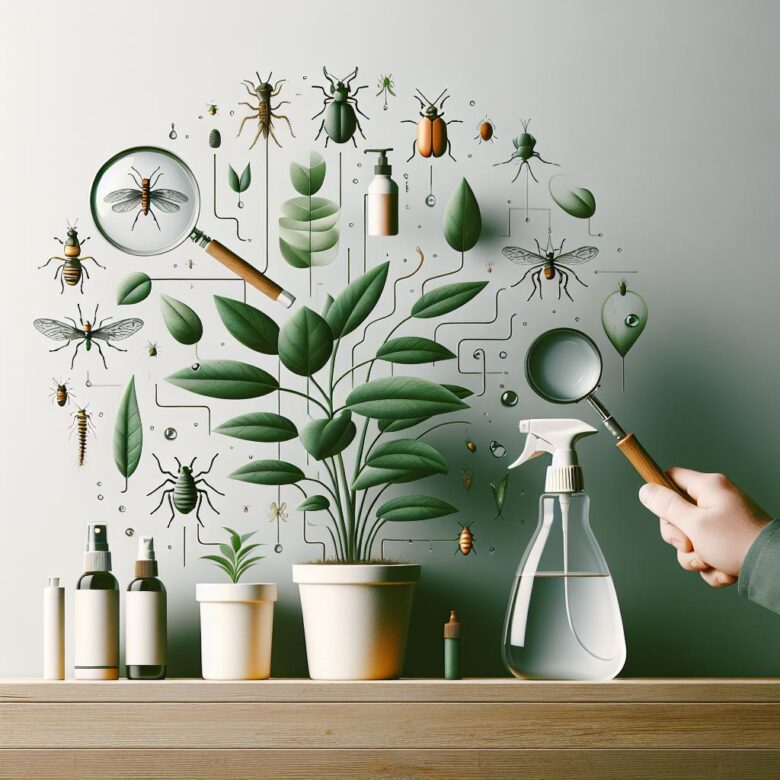
| Spider mites | Fine silk webbing between nodes; tiny moving specks; leaf underside “dust” | Pinpoint stippling → bronzing; edges crisp; damage starts on older leaves |
| Mealybugs / Scale | Mealybugs look like cotton tufts in joints; scale are immobile tan/brown bumps on stems | Sticky honeydew + sooty mold; distorted new growth; ants often present |
| Fungus gnats | Small black flies hovering over soil; larvae in top 2-3 cm | Seedling collapse; slow decline from root grazing; surface stays wet |
Field Note: I’ve confirmed “scale” in minutes by photographing suspect bumps and checking for leg movement at 20-30× using a clip-on lens, then logging locations in Plantix to avoid missing the second infestation cluster on adjacent pots.
Natural Pest Control That Works: Neem Oil, Insecticidal Soap, and Alcohol Swabs-Exact Dilutions, Application Timing, and Plant-Safe Testing
Most natural sprays fail because users guess concentrations and spray under full sun, causing leaf burn before pests die. You need exact dilutions, correct timing, and a quick phytotoxicity test logged consistently (I track mixes and results in PlantNote).
| Treatment | Exact dilution + mix | Timing, targets, and plant-safe test |
|---|---|---|
| Neem oil (azadirachtin) | 0.5-1%: 5-10 mL neem oil + 1-2 mL mild liquid soap (emulsifier) per 1 L lukewarm water; shake hard each use. | Apply at dusk, wetting undersides; repeat every 7 days x 3 cycles for mites/whitefly/scale crawlers. Patch-test 24 hours on 2-3 leaves; avoid on ferns/succulents/hairy-leaved plants. |
| Insecticidal soap / alcohol swabs | Soap: 2% = 20 mL true potassium salts of fatty acids per 1 L water. Alcohol: spot-treat with 70% isopropyl on cotton swab; for spray, dilute to 30-40%. | Soap: morning or dusk, rinse after 2-3 hours on sensitive foliage; repeat every 4-5 days for aphids/mealybugs. Alcohol: dab visible clusters; avoid repeated spraying on thin leaves; patch-test 12 hours. |
Field Note: After a client kept “nuking” calathea edges, switching to a documented 2% soap spray at dusk with a 2-leaf patch test eliminated mealies in 14 days with zero chlorosis.
Prevent Reinfestation Like a Pro: Quarantine Protocols, Soil & Pot Sanitation, and Watering Fixes That Stop Pests Without Harsh Chemicals
Most “natural” pest failures are reinfestations: eggs and crawlers hitchhike on a new plant or survive in damp, algae-coated soil and reused pots. Treat the environment, not just the leaves, or you’ll repeat the cycle every 10-14 days.
| Risk Point | Protocol (No Harsh Chemicals) | Technical Standard |
|---|---|---|
| Quarantine new plants | Isolate 21-30 days; inspect leaf undersides + nodes twice weekly; deploy yellow sticky cards; log checks in PlantNote. | 2 inspections/week; zero contact with shared tools, drip trays, or fans. |
| Soil & pot sanitation | Discard heavily infested soil; scrub pots with hot soapy water, then 10% bleach soak 10 min (rinse/dry) or steam; replace saucer liners. | Remove biofilm; fully dry before repotting to prevent fungus gnat rebound. |
| Watering fixes | Switch to “dry-down” cycles; bottom-water only if top 2-3 cm dries; use a moisture meter; increase airflow. | Target RH 40-60%; no standing water >30 minutes in trays. |
Field Note: After a client kept “mysteriously” regetting fungus gnats, we traced it to a shared watering can and algae-slick saucers-one sanitation reset plus strict 30-day quarantine eliminated them without escalating beyond soap and sticky traps.
Q&A
FAQ 1: How can I quickly identify which pest is attacking my houseplant (without a magnifying glass)?
Start with the damage pattern and where it appears, then confirm with a simple “tap test.”
- Sticky leaves or shiny residue (honeydew): typically aphids, mealybugs, or scale. Check stems, leaf joints, and undersides.
- Fine webbing + tiny pale speckling: usually spider mites (often worse in dry air). Webbing is common on leaf tips and between nodes.
- Silvery streaks/patches + tiny black dots (frass): typically thrips. Damage often shows on newer leaves and flowers.
- Cloud of tiny white insects when disturbed: whiteflies (mostly on undersides of leaves).
- Small black flies around soil: fungus gnats; larvae feed in damp potting mix, especially if roots are stressed.
Tap test: hold a white sheet under a leaf and tap the foliage. Moving “pepper” specks suggest mites or thrips; slow, soft-bodied insects suggest aphids.
FAQ 2: What natural treatment works best for most common pests without harming the plant?
The most reliable natural approach is a 3-step integrated routine that avoids plant burn and improves success rates.
- Step 1 – Mechanical removal: rinse foliage with lukewarm water (shower or sink sprayer). For mealybugs/scale, wipe with cotton swabs dipped in 70% isopropyl alcohol (spot-treat; avoid saturating delicate leaves).
- Step 2 – Low-toxicity spray: use insecticidal soap (preferred) or a neem/horticultural oil product. Coat undersides thoroughly; spray in the evening or out of direct sun to prevent leaf scorch.
- Step 3 – Repeat on a schedule: reapply every 5-7 days for 3-4 rounds to catch newly hatched pests (critical for mites, thrips, and whiteflies).
Expert cautions: Oils can damage some plants (e.g., many ferns, some succulents, and stressed plants). Always test on 1-2 leaves and wait 24-48 hours. Never apply soaps/oils in hot sun or to dehydrated plants.
FAQ 3: Why do pests keep coming back, and how do I prevent reinfestation naturally?
Recurring infestations usually come from missed life stages, hidden hotspots, or conditions that favor the pest.
- Not treating long enough: many products don’t kill eggs; stopping after one spray allows rebound. Keep the 5-7 day cycle for several rounds.
- Hidden pests: check leaf axils, stem crotches, pot rims, saucers, and the plant’s underside near the soil line. Scale and mealybugs often hide at nodes.
- Soil-related sources: fungus gnats persist if potting mix stays wet. Let the top layer dry, improve drainage, and use BTI (Bacillus thuringiensis israelensis) drenches or yellow sticky traps to break the cycle.
- Reintroduction from new plants: quarantine new arrivals for 2-3 weeks; inspect weekly and treat at first signs.
- Plant stress: low light, irregular watering, and very dry air make plants more vulnerable (especially to spider mites). Stabilize care and remove heavily infested leaves.
Final Thoughts on How to Identify and Cure Common Houseplant Pests Naturally
Natural pest control only works when you treat the plant and the environment as one system-light, airflow, watering habits, and leaf cleanliness either prevent outbreaks or invite them.
Pro Tip: The biggest mistake I still see is spraying once and relaxing. Most houseplant pests hatch in waves; if you don’t repeat treatment on a tight schedule, you’re only knocking down adults and leaving the next generation untouched. Also, never use oil-based sprays under strong sun or grow lights-leaf burn shows up fast and looks like disease.
- Do this now: set a recurring calendar reminder for 3 treatments, 5-7 days apart, and place a sticky trap in each problem pot tonight to verify activity and track progress.

the dirt-under-the-fingernails creator behind Root & Bloom. My mission is simple: to make gardening accessible, sustainable, and beautiful. From indoor jungles to backyard vegetable patches, let’s get back to the basics and watch something incredible grow.