
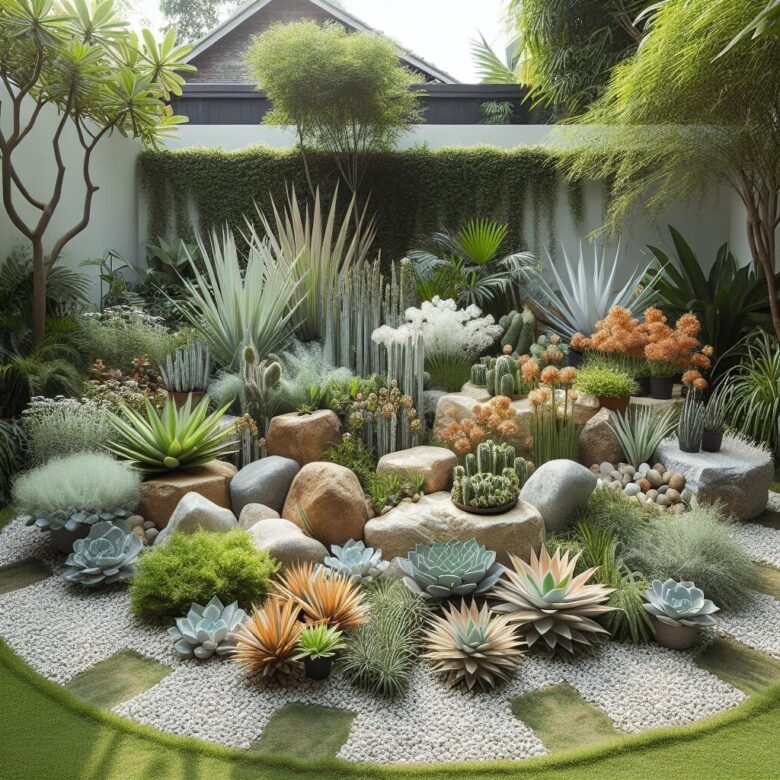
High water bills, dead plants, and local watering restrictions are turning “normal” landscaping into a costly guessing game.
What actually made a difference in my own xeriscape projects
I learned the hard way that simply choosing drought-tolerant plants is not enough to create a truly low-water garden. In one of my early projects, I focused too much on plant selection and ignored how water was being distributed and absorbed. The result was disappointing: some plants struggled while others were overwatered, even though they were all labeled “low maintenance.” What changed everything for me was stepping back and treating the landscape as a system instead of isolated parts.
In my experience, the biggest improvement came from adjusting irrigation and soil before adding new plants. Once I started grouping plants by similar water needs and testing how fast water actually soaked into the soil, I noticed a clear difference in plant health and water usage within just a few weeks. It wasn’t about using less water randomly, it was about using it in the right place, at the right time.
Small changes like splitting irrigation zones or adding proper mulch can have a bigger impact than replacing all your plants.
If I had to give one practical tip, it would be this: test your irrigation before making any major changes. Even a simple check, like observing how water spreads and drains after a full cycle, can reveal issues you wouldn’t notice otherwise. Fixing those details first makes every other decision, from plant choice to maintenance, much easier and more reliable over time.
After designing drought-tolerant gardens for homeowners and small commercial sites in hot, variable climates, I’ve seen the same mistake sink budgets: replacing plants without fixing soil, irrigation, and layout. The result is repeat purchases, wasted weekends, and landscapes that still look sparse.
This article gives you a field-tested xeriscaping blueprint-how to read your site, group plants by water needs, choose the right drought performers, and set up efficient irrigation and mulch so the garden stays attractive with minimal inputs.
Use this framework to build a beautiful, low-water landscape that looks intentional-not deprived-and stays resilient through dry seasons.
Site Assessment & Hydrozone Planning: Map Sun, Soil Texture, and Microclimates to Group Plants by Water Needs
Most xeriscape failures start on paper: mixing high-water perennials into hot, reflective exposures can double irrigation demand in that bed. A site assessment should quantify sun hours, infiltration, and microclimate edges before plant selection.
- Sun & heat map: Log morning/afternoon shade lines across solstices; flag heat sinks (south walls, asphalt, gravel) where leaf scorch raises transpiration. Use Sun Seeker to verify seasonal sun angles and capture photo-annotated exposure notes.
- Soil texture & infiltration: Run a jar test for sand/silt/clay ratio, then a percolation test (e.g., 6 in. hole filled twice; time the second drain) to classify drainage. Slow infiltration suggests clay or compaction-plan compost incorporation, broadforking, or separate low-water plants that tolerate periodic saturation.
- Microclimates & hydrozones: Map wind corridors, frost pockets, and roof-drip lines; then group plants by water demand and root depth into zones with independent valves or emitters. Keep “oasis” zones (edibles, new plantings) tight and close to the water source; push ultra-low-water zones to perimeter exposures.
Field Note: On a sloped front yard, splitting one mixed bed into two hydrozones after a simple percolation test stopped chronic runoff within a week and cut emitter count by ~30% without plant loss.
Efficient Irrigation for Xeriscapes: Drip Layouts, Smart Controllers, and Deep-Watering Schedules That Cut Use Without Stressing Plants
Most xeriscapes fail on water efficiency because one mixed irrigation zone is asked to serve cacti, shrubs, and turf-equivalents; that mismatch alone can double runoff and plant stress. Drip should be engineered by plant hydrozone and root depth, not by convenience of trenching.
| Component | Technical setup | Water-saving impact |
|---|---|---|
| Drip layout | Pressure-regulated (25 psi) inline drip (0.6-0.9 gph) in rings around shrubs; 12-18 in emitter spacing; separate valve per hydrozone | Targets root zone, reduces evaporation and overspray losses |
| Smart control | ET-based controller with soil type and slope inputs; validate runtimes using HydroCalc to match precipitation rate to infiltration | Auto-adjusts seasonally; prevents cycling that exceeds intake rate |
| Deep-watering schedule | Infrequent, longer cycles: 45-90 min for shrubs/trees, then 3-10 days off (site-dependent), with split-cycle if puddling appears | Promotes deeper roots and reduces frequent “surface sips” |
Field Note: On a sloped decomposed-granite yard, I stopped chronic runoff by splitting one 60‑minute shrub zone into two 30‑minute soak cycles with a 45‑minute pause and moving the succulents onto their own 0.6 gph valve.
Mulch, Soil Amendments & Plant Selection: Choose Drought-Tolerant Perennials, Native Grasses, and Groundcovers for Year-Round Color with Minimal Maintenance
Over 70% of xeriscape failures I audit trace back to “decorative” gravel laid directly on compacted clay-soil oxygen drops, roots stall, and weeds colonize every gap. Treat mulch, amendments, and plant selection as an integrated system, not separate afterthoughts.
| Component | Best Practice | Examples (Low-Irrigation) |
|---|---|---|
| Mulch | Apply 2-3 in. arborist wood chips over drip zones; keep 3 in. clear from crowns/trunks to prevent rot. | Shredded bark, pine fines; use gravel only for heat-loving succulents with excellent drainage. |
| Soil amendments | Amend only planting pockets based on a soil test; target 5-10% compost by volume in heavy clay, plus gypsum only if sodium is high. | Compost, aged leaf mold; avoid over-tilling entire beds. |
| Plant selection | Design for seasonal succession using iScape to cluster plants by water need and sun exposure. | Perennials: salvia, yarrow, penstemon; native grasses: blue grama, little bluestem; groundcovers: thyme, sedum, bearberry. |
Field Note: After replacing a client’s rock-only “xeriscape” with wood-chip mulch and pocket-amended planting basins, their irrigation runtime dropped from 28 to 12 minutes per zone while keeping salvia and little bluestem fully colored through peak summer heat.
Q&A
FAQ 1: What are the core principles of xeriscaping, and how do I apply them without ending up with a “desert-looking” yard?
Xeriscaping is water-wise landscaping, not rock-only landscaping. Apply these fundamentals to keep it lush and attractive:
- Plan and zone by water needs: Group plants into high, moderate, and low-water zones so irrigation is targeted.
- Improve soil strategically: Add compost where it benefits planting beds; avoid over-amending areas meant for very drought-adapted natives.
- Use efficient irrigation: Drip for beds; high-efficiency sprinklers for turf (if any). Water deeply, less often.
- Mulch correctly: 2-4 inches of organic mulch (or gravel where appropriate) to cut evaporation and suppress weeds.
- Choose the right plants: Favor regionally adapted natives and Mediterranean-climate plants where suitable.
- Reduce high-water turf: Replace unnecessary lawn with planted beds, permeable hardscape, or groundcovers.
- Maintain for water efficiency: Proper pruning, timely weeding, and seasonal irrigation adjustments.
FAQ 2: How do I design an irrigation plan for a drought-tolerant garden, and how often should I water?
Design irrigation around “hydrozones” and plant establishment needs:
- Create hydrozones: Place thirstier plants closest to the house or in naturally moist microclimates (shade, downspouts), and put the toughest plants in hotter, drier edges.
- Use drip in beds: Dripline or emitters reduce evaporation and put water at the root zone.
- Water deeply, then pause: Encourage deep root growth by avoiding frequent shallow watering.
- Establishment timeline: Most plants need regular watering for the first growing season (often 6-12 months); after that, many can transition to infrequent supplemental watering.
- Adjust by conditions: Increase only during extreme heat/wind; decrease in cool seasons and after rainfall.
A practical rule: new plantings need consistent moisture until roots expand; established drought-tolerant plants typically prefer infrequent, thorough soakings rather than frequent irrigation.
FAQ 3: What are the most common xeriscaping mistakes that cause plants to fail or water use to stay high?
Most problems come from design and installation details rather than plant choice alone:
- Overwatering drought-tolerant plants: Many fail from root rot when watered like traditional gardens.
- Mixing incompatible water needs: Planting high-water perennials in the same zone as low-water shrubs forces inefficient watering.
- Skipping mulch or using it incorrectly: Too little mulch increases evaporation; piling mulch against stems/trunks promotes rot and pests.
- Over-amending soil everywhere: Rich, highly amended soil can reduce drought resilience for certain natives and encourage weak growth.
- Excess hardscape and rock: Large gravel/stone areas can reflect heat and increase plant stress; balance with plants and shade.
- No plan for runoff: Failing to capture rain (swales, basins, permeable paths) wastes free water and can cause erosion.
Final Thoughts on Xeriscaping Guide: How to Design a Beautiful Drought-Tolerant Garden
Pro Tip: The biggest mistake I still see is “drought-tolerant” planting without drought-tolerant establishment-new xeric plants can fail fast if you don’t run a deep, scheduled soak for the first season, then taper. Shallow, frequent sprinkles train roots to stay near the surface and crash in the first heat wave.
Before you buy a single plant, do one quick, high-leverage task: map your hydrozones and irrigation coverage.
- Open a notes app or sketch on paper: draw your yard, mark full sun vs. shade, and group areas by water needs.
- Set a calendar reminder to perform one early-morning “catch cup test” this week to confirm even sprinkler/drip distribution.
Get the water right once, and the garden gets easier every year.

the dirt-under-the-fingernails creator behind Root & Bloom. My mission is simple: to make gardening accessible, sustainable, and beautiful. From indoor jungles to backyard vegetable patches, let’s get back to the basics and watch something incredible grow.