Most yards don’t lose value from bad plants-they lose it from neglected upkeep buyers can see in 10 seconds. Overgrown beds, patchy turf, and mismatched hardscapes quietly signal “more work,” and that perception can shave thousands off offers or stretch days on market.
Why I Always Look at Maintenance Before I Look at Style
In my experience, the best-looking yard is not always the one with the most plants or the biggest budget, but the one that still looks clean, intentional, and easy to manage a few months later. I have seen people invest in beautiful landscaping ideas, only to feel frustrated when the upkeep starts taking too much time, water, and money. That is why I think a smart low-maintenance plan is often more valuable than a flashy one. A simple habit that helps a lot is walking out to the curb once a week and checking what stands out right away, because buyers and visitors usually notice the same things first. If the edges look tidy, the plants look healthy, and the layout feels balanced, the whole property tends to feel more cared for without needing constant work.
I always trust a landscape more when it still looks good after a busy month, not just right after installation.
After evaluating curb-appeal upgrades for homeowners and small investors, I’ve seen the same mistake: spending big on high-maintenance landscaping that looks great for one season, then turns into a time-and-money drain. The ROI collapses when weekly labor becomes the hidden cost.
Below are the low-maintenance design moves that protect curb appeal year-round-plant palettes, hardscape choices, and layout rules that reduce watering and trimming while making the property look more expensive.
Drought-Tolerant Planting Plans That Boost Curb Appeal and Cut Water Bills
A common high-cost mistake is installing thirsty foundation plantings and narrow turf strips that can push seasonal irrigation demand into the 25-40 inches/year range in warm climates. A drought-tolerant plan reduces peak summer runtime while keeping the front elevation crisp and “finished” from the street.
- Hydrozones + layout: Group plants by water need (0-1×/month, 2×/month, and establishment-only) and limit turf to functional rectangles; use HydroCAD to verify drainage paths before swapping lawn for gravel/planting beds.
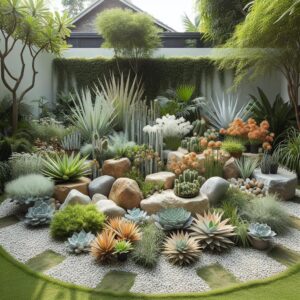
- High-ROI plant palette: Evergreen structure (dwarf juniper, rosemary, manzanita) + seasonal accents (lavender, salvia, yarrow) + one focal small tree (olive, desert willow, crape myrtle in milder zones) for year-round curb appeal without constant watering.
- Soil + irrigation specs: Amend planting zones with 2-3″ compost, cap with 2-3″ mulch, and convert sprays to pressure-regulated drip (0.6-0.9 GPH emitters) on a smart controller with cycle/soak to prevent runoff.
Field Note: On a 6,800 sq ft corner lot, switching sprays to drip and consolidating turf into two rectangles cut summer controller runtime by 52% after we found overspray onto hardscape during a nozzle audit.
Hardscape ROI: Permeable Pavers, Stone Edging & Mulch Systems That Reduce Upkeep and Raise Appraised Value
Most “low-maintenance” landscapes fail at the hardscape: tight-joint pavers, no edge restraint, and fabric-less beds lead to weed intrusion and re-leveling within 18-36 months. Permeable systems and disciplined edging raise appraisal-friendly curb appeal while cutting routine labor tied to puddling, blowout mulch, and migrating gravel.
| System | Upkeep Reduction Mechanism | Value/Appraisal Signal |
|---|---|---|
| Permeable interlocking pavers (open-graded base) | Manages stormwater on-site; minimizes freeze-thaw heave and joint washout; less algae from standing water | Documentable drainage upgrade; cleaner hardscape lines that read as “premium finish” in photo-based comps |
| Stone edging w/ aluminum or concrete restraint | Prevents mower scarring and bed creep; reduces annual re-cutting and material migration | Sharp bed geometry increases perceived site organization-often reflected in higher condition adjustments |
| Mulch systems: 2-3″ shredded hardwood over proper fabric-free prep | Suppresses weeds without fabric failures; stabilizes soil moisture; fewer top-offs than fines | Uniformity and plant health improve listing photos; quantify materials in mTextur to standardize specs |
Field Note: After switching a flagged patio to a permeable base and adding rigid edge restraint, I verified infiltration rates and joint spec consistency in HydroCAD, and the homeowner stopped paying for seasonal re-leveling entirely.
“Set-and-Forget” Landscape Design: Native Plant Layers, Smart Irrigation, and Low-Growth Groundcovers for High-Value Homes
Overwatering is the fastest way to turn a “low-maintenance” luxury landscape into a recurring service call-most failures start with single-layer planting and non-zoned irrigation that forces shrubs, groundcovers, and trees onto one schedule. A true set-and-forget plan uses native plant layers matched to hydrozones, then locks stability in with low-growth groundcovers that suppress weeds and reduce mow/edge labor.
- Layered native structure: Canopy (small native trees) + mid-story shrubs + herbaceous perennials + groundcover; specify mature sizes so each layer shades soil without overcrowding, cutting evapotranspiration and pruning frequency.
- Smart irrigation by hydrozone: Separate drip zones for shrubs/trees and low-volume beds, with cycle/soak programming and a flow sensor to flag breaks; map zones and valve sizing in HydroCAD to prevent pressure loss at end-of-line emitters.
- Low-growth groundcovers: Use species that stay under 6-8 inches, tolerate foot-adjacent heat, and knit densely; pair with 2-3 inches of mulch only during establishment, then taper mulch to avoid crown rot.
Field Note: On a high-value corner lot, we eliminated chronic brown patches by splitting one mixed bed into two drip hydrozones and correcting the last 40 feet of undersized lateral line that was starving emitters at peak run time.
Q&A
FAQ 1: What low-maintenance upgrades add the most property value without making the yard look “cheap”?
Focus on high-impact, permanent features buyers perceive as “finished”: defined edging, a clean hardscape layout, and structured planting beds with year-round form. Replace high-input lawn areas with wide mulched beds, drought-tolerant foundation plantings, and a simple pathway or patio. Use a limited plant palette (3-7 core species) for a cohesive, upscale look and easier upkeep.
FAQ 2: Does removing or reducing lawn hurt resale value, and what’s the best alternative?
Reducing lawn typically does not hurt value if the replacement looks intentional and functional. Buyers dislike patchy, high-maintenance turf more than smaller, healthier lawn areas. Keep a “usable green zone” (often the front-center or a small backyard area) and convert the rest to:
- Mulched planting beds with shrubs and perennials for structure
- Groundcovers (e.g., creeping thyme, sedum, liriope where appropriate) to suppress weeds
- Hardscape (pavers, decomposed granite, stepping stones) for clean circulation and low upkeep
Avoid large expanses of loose gravel in prominent areas; it can read as cost-cutting unless paired with strong design, boulders, and specimen plants.
FAQ 3: What are the biggest low-maintenance landscaping mistakes that reduce curb appeal (and value)?
- Overplanting fast growers (leads to constant pruning, crowding, and messy facades)
- Ignoring irrigation strategy (either no irrigation in hot climates or inefficient spray heads that waste water and cause disease)
- Using “zero-maintenance” materials incorrectly (fabric under mulch that resurfaces, gravel without edging that migrates, or brittle plastic edging)
- Inconsistent style (too many plant varieties, colors, and bed shapes-reads chaotic and hard to maintain)
- Poor bed lines and lack of borders (crisp edging is one of the cheapest ways to look premium)
For value retention, prioritize tidy lines, evergreen structure, and plants sized appropriately for their mature width-this keeps the landscape looking intentional with minimal labor.
Final Thoughts on Low-Maintenance Landscaping Ideas for High Property Value
High-value “low-maintenance” landscapes fail most often at the edges-where mulch meets siding, gravel meets driveway, or irrigation meets hardscape. If those transitions aren’t detailed correctly, you’ll see rot, staining, washouts, and weeds that erode curb appeal fast.
Pro Tip: The biggest mistake I still see homeowners make is blowing the entire budget on plants and ignoring drainage and access-no cleanouts, no shutoff valves, no service path. Plan for maintenance you can’t avoid, and the yard stays profitable-looking for years.
- Right now: take 10 photos of your front yard (wide + close-ups of grades, downspouts, foundation, and problem spots).
- Upload them to a folder titled “Landscape ROI,” then request one itemized quote focused only on drainage fixes and bed edging.

the dirt-under-the-fingernails creator behind Root & Bloom. My mission is simple: to make gardening accessible, sustainable, and beautiful. From indoor jungles to backyard vegetable patches, let’s get back to the basics and watch something incredible grow.